Why Photos Don’t Replace In-Person Walks With Your Builder

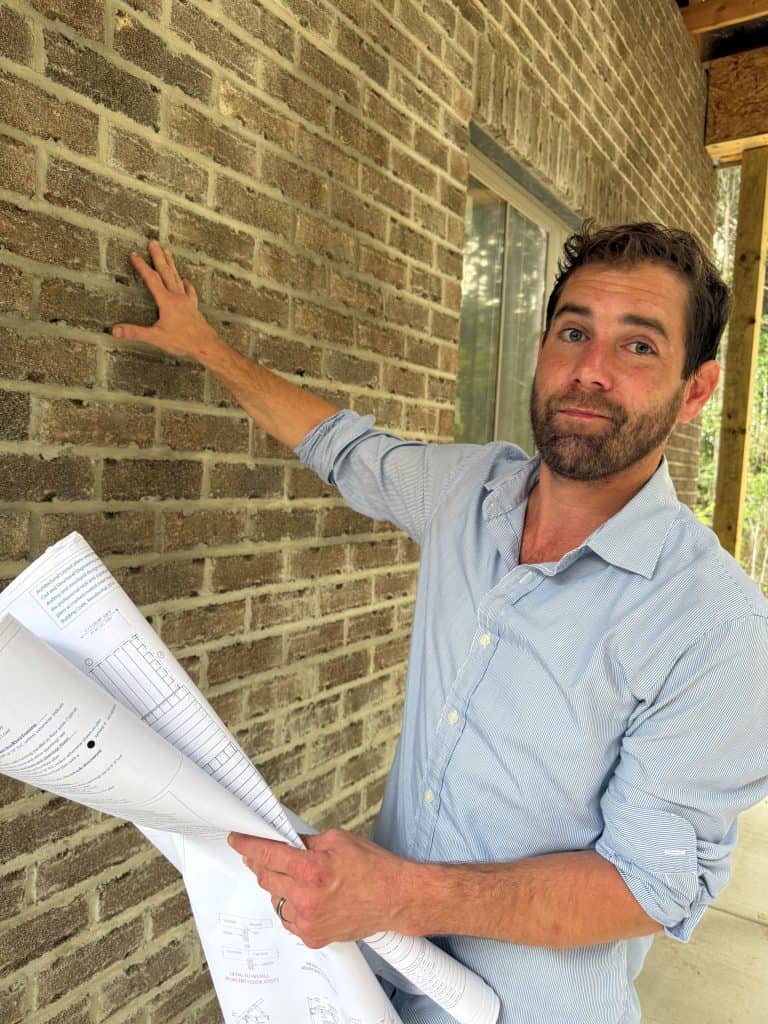
When you’re building a custom home in central NC, photos and progress updates are incredibly helpful. But they’re not a substitute for standing on the jobsite with your builder! As hands-on builders, we walk every home regularly, and we know how much clarity, confidence, and problem-solving happens only when everyone is physically in the space.

Below is a clear breakdown of why on-site walks matter, what you’ll gain from them, and how they help protect your timeline, budget, and design decisions.

Why Aren’t Photos Enough During Construction?

Photos are great for documenting progress, but they flatten information. Rooms, framing, and layouts simply don’t “read” the same in two dimensions. More importantly, construction-industry research consistently shows that owner–builder communication quality directly impacts project satisfaction and the likelihood of change orders.

What Do You See In-Person That You Can’t See in Photos?

1. Depth, proportion, and sightlines

Standing in the framed home allows you to understand scale in a way photos cannot. This aligns with findings from residential construction quality studies by HUD, which emphasize the importance of field verification during construction phases.

2. Mechanical and structural elements

Pre-drywall walks allow you to physically trace HVAC runs, plumbing, wiring, and framing before they’re concealed. On-site inspection is a best practice emphasized by NAHB to reduce rework and misalignment.

3. Natural light

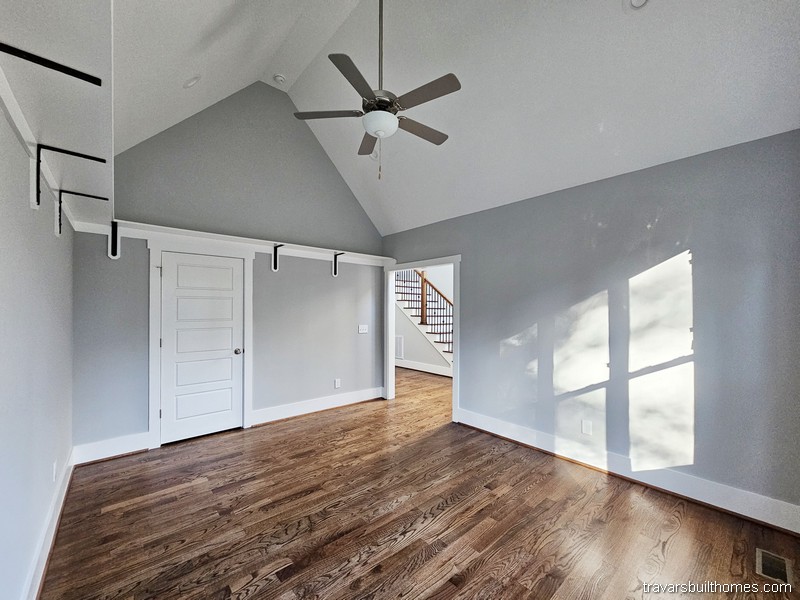
Seeing how light moves through the home requires being in the space. This is especially true in rural or wooded areas throughout Chatham, Alamance, and Orange counties, where slopes and tree cover affect interior daylighting.

How Do On-Site Walks Improve Communication With Your Builder?

Even with detailed photos, some questions require more than a static image. During on-site walks, we can point to specific framing, show alignments, review structural changes, and make decisions collaboratively — something communication studies repeatedly confirm leads to better construction outcomes.

This supports what we see on the ground: clarity increases dramatically when everyone is physically examining the same element of the home.

What Happens If You Skip Walks and Rely Only on Photos?

Homes built on land in Chatham County, Durham County, Alamance County, and Orange County often have unique grading, driveway slopes, well and septic locations, and tree lines. Photos rarely reveal:

  • True grading angles
  • Drainage paths
  • Topography shifts
  • Exterior mechanical clearances
  • Ceiling height perception

NC Cooperative Extension specifically notes that site conditions such as soils, slope, and drainage cannot be fully evaluated without physical inspection.

When Are Walks Most Important?

We recommend being physically present for:

  • Pre-construction site meeting
  • Framing/Electrical walk
  • Pre-drywall walk
  • Trim and interior detail walkthrough

These checkpoints align with NAHB’s recommended owner engagement points throughout construction.

FAQs

See Also

  • “What to Expect When Building a Custom Home on Rural Land in NC”— a practical look at wells, septic, site prep, and how rural land shapes your build timeline and decisions.
  • What Should I Look For During a Pre-Drywall Walkthrough?”— a step-by-step guide to understanding mechanicals, insulation placement, and what your builder wants you to confirm before walls are closed.
  • What Happens After Your Custom Home Is Completed?”— a clear overview of warranties, punch list steps, maintenance expectations, and how your builder supports you long after move-in.

Have any Questions? Get in Touch Today!

Sources:

  • https://www.huduser.gov/portal//Publications/pdf/qualityconnection.pdf
  • https://www.huduser.gov/portal/portal/sites/default/files/pdf/Offsite-Construction-for-Housing-Research-Roadmap.pdf
  • https://www.huduser.gov/portal/Publications/pdf/industrialization.pdf
  • https://www.nahb.org/education-and-events/education/on-demand-education-courses/site-planning-approvals-and-construction
NC Custom Home Photo Tours

What Empty Nesters Look for in Pittsboro Homes

Empty nesters across central North Carolina are entering a stage of life where home starts to look different. With kids grown and daily routines changing, many are choosing to build a home that fits the way they want to live now — with more comfort, less upkeep, and spaces that feel intentional rather than oversized. Pittsboro has become a top choice for this transition because it offers the best of both worlds: small-town calm with easy access to Chapel Hill, Durham, Cary, and Raleigh.

As builders, we see consistent themes in what truly adds value during this season of life. Here’s how homeowners are rethinking design, layout, and lifestyle features as they create a home that supports flexibility, connection, and long-term livability.

Why Are So Many Empty Nesters Choosing Pittsboro?

Pittsboro offers the balance empty nesters want: peaceful surroundings, easy access to Chapel Hill and Raleigh, and communities designed with privacy and nature in mind. Market research shows that suburban and small-town locations with strong amenities are especially appealing to 55+ buyers. Pair that with Chatham County’s growing arts, food, and outdoor scene, and it’s easy to understand why this demographic gravitates here.

What Floor Plan Features Matter Most?

1. Main-Level Living

The AARP Home and Community Preferences Survey highlights that older adults overwhelmingly prefer homes with accessible primary living spaces on the main floor. We design most Pittsboro-area homes with the owner’s suite, kitchen, living space, and laundry all on the first level — making daily life simpler and safer over time.

2. Flexible Guest Spaces

Many empty nesters want rooms that adapt: a guest suite for visiting adult children, a hobby room, or a study that doubles as overflow space. These flexible spaces allow the home to evolve over time without requiring major renovations or additional square footage.

3. Open Layouts With Defined Purpose

Open designs remain popular, but clarity in how spaces connect helps ensure the home feels intimate rather than oversized. When we walk through plans with homeowners, we focus on flow, natural light, and accessibility.

What Lifestyle Amenities Do Empty Nesters Want?

  • Storage That’s Just the Right Size: Walk-in pantries, organized laundry rooms, and smart closet systems help homeowners live comfortably without excess space that goes unused.
  • Outdoor Living: Covered porches, grilling patios, and low-maintenance yards are high priorities.
  • Low Maintenance & Energy Efficiency: Energy-efficient appliances, durable exterior materials, and reduced-maintenance landscaping help empty nesters spend less time on upkeep.

Floor Plans From Travars Built Homes That Fit Empty Nester Needs

Here are some Travars Built Homes floor plan ideas that align with what we see empty nesters seeking — features like main-floor primary suites, flexible living areas, and accessible layouts. These include homes like:

  • Amherst— A comfortable one-story home that balances living space and ease of navigation.
  • Noni Cottage — A more compact home with a first-floor primary suite, perfect for low-maintenance living.
  • Applewood — Offers a main floor primary suite and open interior flow, great for grandkid visits or hobby space.

Customizable Options for Future Flexibility

Even within larger plans, we can tailor layouts so the primary bedroom, laundry, and living spaces feel intuitive and accessible — something empty nesters frequently ask for during design consultations. Explore our house plan search to filter for main floor master, one-story homes, or special features that matter most to you.

Whether you like something cozier or a home with guest rooms and flex spaces, every plan we build for empty nesters starts with your lifestyle in mind.

FAQs

See Also:

Have any Questions? Get in Touch Today!

Front Porch Ideas That Make a Lasting First Impression

A front porch does more than frame the entrance of your home. It sets the tone for every first impression. Across Chatham, Pittsboro, Chapel Hill, Durham, Alamance, Orange, Wake, and surrounding NC counties, we see how much a well-designed porch contributes to curb appeal, comfort, and the overall character of a custom home. Whether you prefer a classic Southern welcome, a clean modern entry, or something in between, thoughtful porch design makes your home feel intentional from the moment someone steps onto the walkway.

Since porch proportions and details are determined early in the design process, we often encourage homeowners to begin by looking at floor plans, our house plan search makes it easy to explore homes with large front porches in a range of architectural styles. Below are practical, builder-backed ideas for creating a front porch that stands out while staying true to your style and your home’s architecture.

What Makes a Front Porch Feel Inviting?

Front porches work best when they balance function, design, and usability. National datasets consistently show that enhancing the entry — including porches and front doors — is one of the highest-ROI curb appeal improvements for home value and buyer perception. But ROI aside, this space shapes first impressions instantly. Here’s what matters most.

Which Design Elements Have the Biggest Impact?

1. Columns & Architectural Details

The right columns anchor the entire façade. Whether you’re building in Pittsboro’s wooded acreage communities or closer to Hillsborough’s rolling meadow neighborhoods, proportion and style matter. Details like tapered craftsman columns, clean-lined square posts, or simple modern brackets create the design language your porch communicates.

Industry guidelines from the American Institute of Architects emphasize architectural cohesion — meaning porch elements should work with the roofline, scale, and style of the home.

2. Lighting That Sets the Tone

Front porch lighting affects both safety and style. Warm, properly scaled fixtures improve curb appeal and nighttime visibility. The International Dark-Sky Association also notes that thoughtful outdoor lighting improves ambiance while reducing glare and light pollution.

3. Flooring, Stairs & Railings

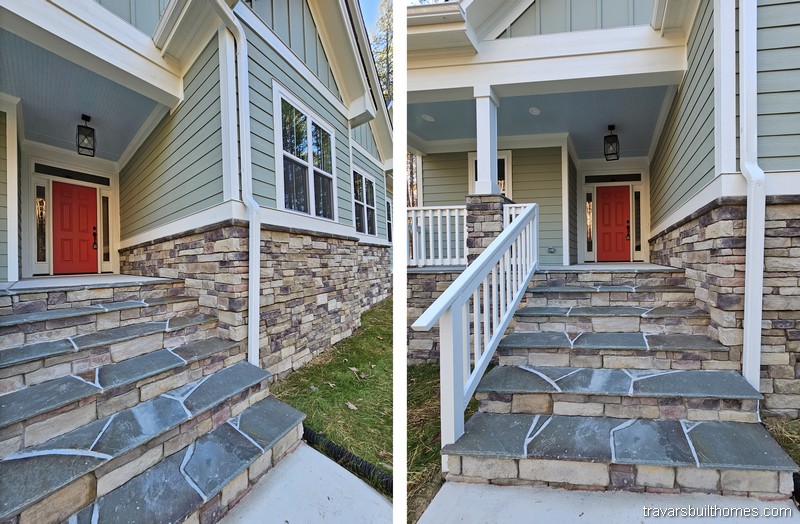
Materials set a mood. Stained wood, composite decking, brick, flagstone, and concrete are all popular across central NC. Your choice affects maintenance and longevity — something emphasized by NAHB durability guidelines for exterior materials.

How Do Landscaping and Approach Paths Shape First Impressions?

A porch doesn’t stand alone: the walkway, steps, and surrounding landscaping complete the entrance.

  • Gentle curves in walkways increase visual interest.
  • Foundation plantings soften the porch structure.
  • Layered lighting enhances pathways at night.

Landscape design guidance from NC State Extension highlights the importance of proportion, native plant suitability, and clear entry definition for curb appeal.

How Can Color Choices Elevate Your Porch?

Color consistency matters. A well-chosen front door color, coordinated trim, and simple accents create a polished, intentional look. Sherwin-Williams’ exterior color studies show how contrast and undertone matching improve curb appeal perception.

When we help homeowners in Pittsboro or Alamance County select colors, we’re always balancing trends with long-term visual harmony.

FAQs

See Also:

Have any Questions? Get in Touch Today!

What to Expect When Building a Custom Home on Rural Land in NC

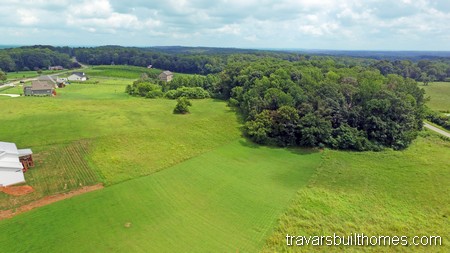
Building a custom home on rural land in North Carolina — especially throughout Chatham, Pittsboro, Chapel Hill, Durham, Alamance, Orange, and Wake counties — is very different from building in a traditional neighborhood. The rewards are huge: privacy, room to breathe, and the ability to shape your home to the land instead of squeezing into a pre-platted lot. But rural builds come with extra steps, from evaluating soils and topography to navigating septic, wells, and county permitting.

As custom builders, we’ve walked this road with homeowners across the Triangle for years. We know where the surprises usually happen — and how to help you avoid them. When you build with TBH, we handle much of this coordination for you, from site evaluations to permit scheduling.

Where to Start: Choosing the Right Parcel

Before breaking ground, the first question is: “Is this land buildable?”

  • Some lots are unrestricted, meaning no HOA or architectural overlays, but you must verify everything, such as utilities, access, zoning, and feasibility, yourself. 
  • Others are zoned for specific uses; zoning determines what you can build.
  • Always check setbacks, easements, and county rules — even near Chapel Hill or Durham.

Pro tip: Order a survey and soil test before purchasing land. Many rural buyers regret skipping this when septic or well placement isn’t feasible. Always check setback rules, easements, and any local restrictions — even in small towns near Durham or Chapel Hill.

Permitting: The Paperwork That Gets You Building

In North Carolina, you can’t build without permits, and rural areas are not exempt. State law requires permits for any new building, alteration, or addition, and counties enforce these rules strictly.

  • Building Permit: Required even for small structures.
  • Zoning Permit: Confirms what’s being built and where.
  • Septic & Well Permits:
    • Septic requires an Improvement Permit and Construction Authorization.
    • Wells require separate permitting, inspection, and water testing.
    • Setbacks determine where systems can be located.

Without these, building permits won’t be approved — which can delay construction for months. At TBH, we take the lead on scheduling, submitting, and tracking many of these permits during the build process — so homeowners can focus on design and decisions rather than paperwork.
Utilities, Access, and Infrastructure

In rural areas, utilities aren’t always ready at the road:

  • Road access might require a private driveway or easement negotiations.
  • Electricity and high-speed internet may require coordination with utility providers — budget for this.

Water and sewer are almost always off-grid in rural NC — meaning well driller and septic installer costs are part of your build budget.

Site Considerations: Weather, Topography, and Soil

Here in the Triangle and beyond, rural land can be wonderfully scenic — but that scenery comes with challenges:

  • Hills, trees, and rock can affect site preparation costs
  • Soil types can affect septic feasibility
  • Flood zones and wetlands add regulatory layers

Planning for these early saves time (and money) when the builder breaks ground.

Design Decisions That Matter Sooner Than You Think

Unlike tract homes, custom builds give you freedom — but that also means decisions come early and fast:

  • Home orientation (sun, views, topography)
  • Foundation type (crawlspace, slab, full basement)
  • Material access (delivery logistics on rural roads)

We always recommend discussing these with your architect and builder in tandem — not sequentially. At Travars Built Homes, we guide you through these early decisions step-by-step, helping you evaluate orientation, foundations, and materials based on your specific land. You can explore examples of how we support these choices in our Design Galley.

FAQs

See Also:

Have any Questions? Start the Conversation Today!

Disclaimer: Information is for general guidance only. Site conditions, county requirements, and timelines vary. Actual feasibility and costs depend on land-specific evaluations and consultations with the builder and relevant professionals. Final project details are determined through the formal construction process.
Sources:

Why More Families Want Dual Owner’s Suites

At Travars Built Homes, we build custom homes for how families actually live—not just how floor plans look on paper. And lately, what families tell us they need most is flexibility: space for aging parents, grown children, long-term guests, and more. Dual owner’s suites can make that possible—without sacrificing comfort or style.

What is a dual owner’s suite — and how is it different from a traditional master suite?

A dual owner’s suite floor plan provides two fully-equipped primary suites—each with its own private bath and spacious closet. Instead of a single primary suite and several lesser bedrooms, you have two primary suites of comparable scale and amenities. This means two high-quality retreats, not one quality suite and one or more lesser rooms.

Why are we seeing more demand for dual owner’s suites?

  • Multigenerational living & changing family dynamics: In our region of Chatham County, Alamance, Orange, Durham, Wake, and more, we frequently encounter families where adult children move back in, aging parents join the household, or siblings decide to build together. A dual owner’s-suite layout gives everyone their own high-quality private space without sacrificing shared living.

  • Privacy, independence & adaptability: Having two equally comfortable owner-level suites means no one feels relegated to a lesser bedroom. It is a layout that supports togetherness and independence—whether you’re balancing work-from-home lifestyles, caring for extended family, or simply building a home that adapts as life changes.

  • Resale value & broad appeal: From a builder’s and buyer’s perspective, homes with dual owner’s suites tend to appeal to a wider market: empty-nesters, multigenerational households, investors, couples who want separate retreats, etc. This flexibility can enhance resale value.

Dual Primary Suite Floor Plans

Here at Travars Built Homes we have several floor plans that offer dual owner’s suite options. Here are just a few:

  • Twin Oaks – This farmhouse-style plan places both owner’s suites on the main level, each with its own bath and walk-in closet. It’s ideal for multigenerational families or homeowners who want main-floor living with plenty of privacy.
Rendering and floor plans copyright ArchitecturalDesigns.com and Associates
  • Sinise– With one owner’s suite on the first floor and another upstairs, this plan provides both separation and flexibility. It’s a great fit for homeowners who host extended family, work from home, or simply like having two equally comfortable retreats.
Modern Craftsman House Plan
Rendering and floor plans copyright Alan Mascord & Associates
  • Vidabelo – Designed from the start for multi-gen living, the Vidabelo offers a spacious main-level owner’s suite plus a second full suite tucked privately on the opposite side of the home. Families across Chatham and Alamance counties love how this layout balances togetherness and independence.
Rendering and floor plans copyright Alan Mascord and Associates

Key Takeaways

  • A dual owner’s suite layout is about flexibility, equality, privacy and future-proofing.
  • The feature is not just luxury for luxury’s sake—it appeals to real-life needs: multigenerational living, work/life mismatch, guest accommodations, resale.
  • If you’re building with us at Travars Built Homes—across Chatham, Pittsboro, Chapel Hill, Durham, Alamance, Orange, Wake and surrounding counties—we can help you decide whether this feature is right for you.
  • Ultimately: build for today’s lifestyle and tomorrow’s.

FAQs

See Also:

Have any Questions? Get in Touch Today!

Sources:

THANK YOU, Chatham County!

Travars Built Homes has been named Best Builder of Chatham County 2025 by Chatham Magazine readers!

This recognition means so much, coming from our home base in Chatham County – one of the nation’s fastest growing regions for all the reasons we love living here and building wonderful homes here.  We are honored by this reflection of our commitment to quality, craftsmanship, care and the homeowners we work closely with to create custom homes the way they want them.

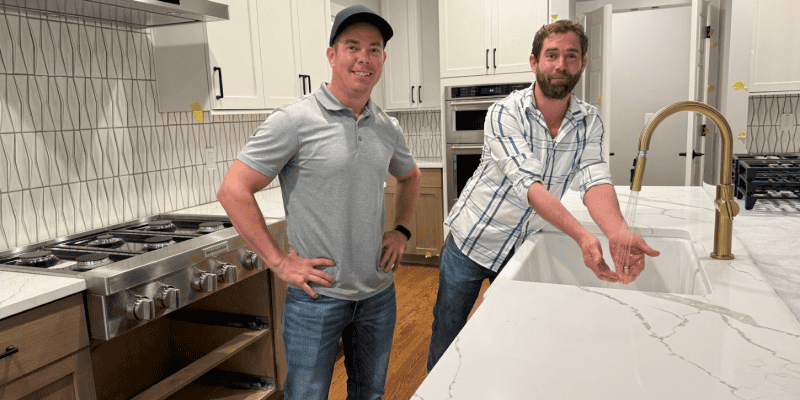
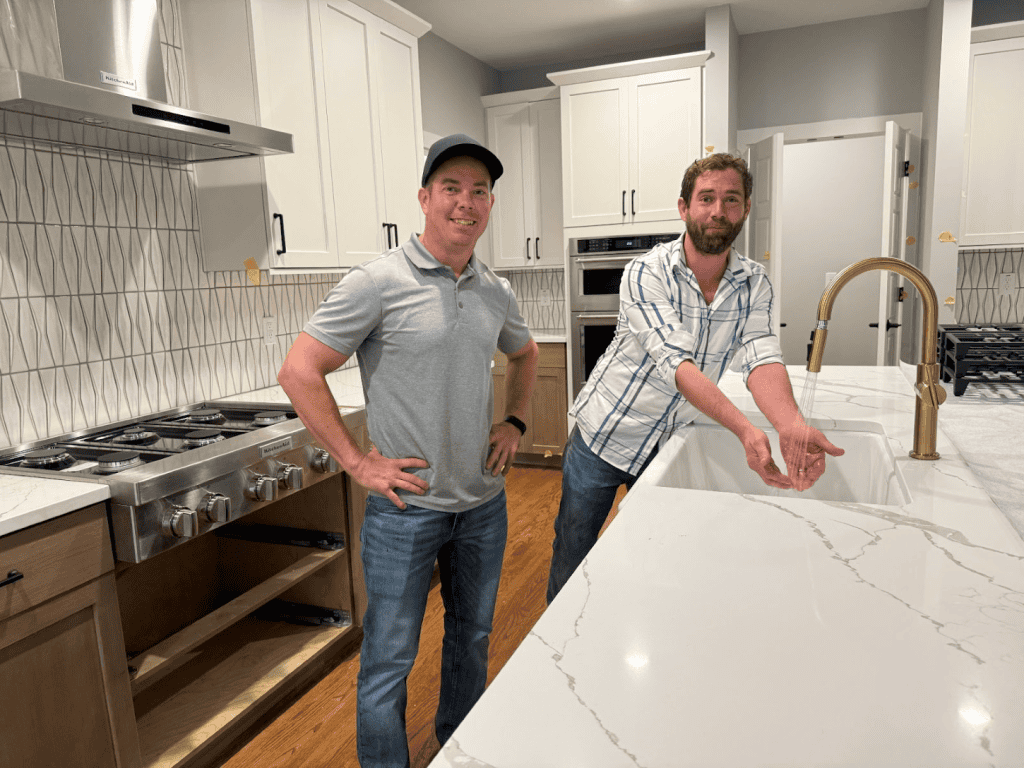
Travars Builder Brothers Phil and Andrew check out details in prep for a final walkthrough before move-in.

Our hands on approach helps ensure everything is good to go — from initial conversation to turning on the taps.

Thank you for your trust and recognition of the incredible homes we create together across Chatham and beyond throughout the Raleigh/Durham/Chapel Hill area. 

Learn more about what makes Travars Built Homes Best in Chatham.

See Also:

Have any Questions? Get in Touch Today!

What Happens After Your Custom Home Is Completed?

Phil is the driving force behind day-to-day construction. With a sharp eye for detail and unwavering commitment to quality, he helps ensure everything behind the walls is just as strong and well-crafted as what’s visible on the surface.

Staying power

One of my favorite involvements outside of building incredible custom homes is competing in obstacle race courses. Both activities share similarities — expert evaluation and navigation of challenges, efficient processes and focus on results. But while a competition ends at the finish line, our commitment to your new home continues long after construction is completed.
How We Keep Caring

We pay attention to every piece of the project, which might be why it can feel like we receive more invitations to your backyard BBQs than warranty calls. But if there’s something you’d like us to take a look at even after you’ve settled in, Andrew or I will typically swing by personally to answer your questions.

We’ll also provide contact information for trusted trade partners if additional follow-up is needed.

Staying Connected

An easy way to stay connected after you settle into your home is through your personal online portal –  the same one that guided you through build phases. Even after construction is complete, you can access documents, ask questions, or revisit details about your home.
What Homeowners Say

We appreciate the 5-star reviews you share for Travars Built Homes — even years after move-in:

Phil Travars has been 100% responsive to our calls and questions even after the one-year warranty period ended.
— S. Grimm

On top of all the things listed above, they are also a small family business. It feels good to support locals, especially when they put out a much better product than the bigger builders in the area. If you need a custom-built home, look no further than Travars Built Homes!
— R. Green

Now that we’re settled, we’re grateful not just for the quality of the home itself, but for the integrity of the people who built it. Travars Built Homes doesn’t just build houses—they build trust, stability, and peace of mind.
— W. Wood

We had our home inspected about six months after we moved in by a third-party inspector (not affiliated with Travars) who inspects hundreds of new builds in the Triangle area, and they said it was a very well-constructed home — no corners were cut, with high-grade finishes. Building a home is a serious commitment of time, energy, and money, and Travars Built Homes makes it all worth it.
— N. Lafave

You can see more reviews here: Customer Reviews: What Homeowners Are Saying About TBH – Travars Built Homes

Key Takeaway

After we hand you the keys, the biggest takeaway is that we’re still here for you. Our family works closely with your family to create your home — and we enjoy hearing how everything is going and how much you love your new home.

At Travars Built Homes, we believe the finish line isn’t the day you move in — it’s knowing you’ll be comfortable, confident, and happy in your home for years to come.

-Phil Travars

Have a question for the builder?

Scandinavian Farmhouse Design Finds a Home in North Carolina

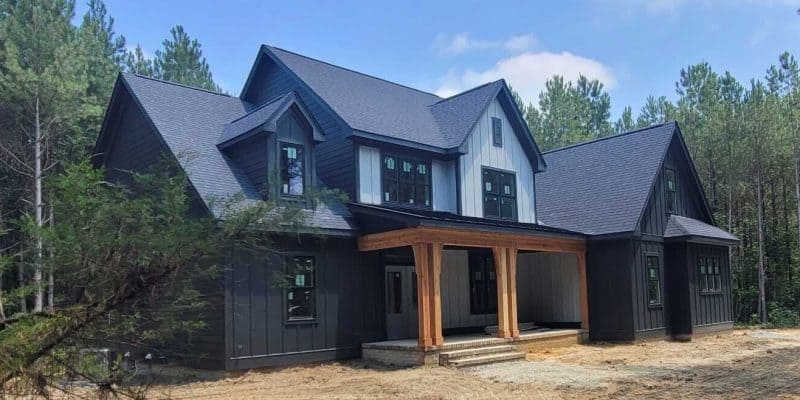
Scandinavian architectural design is a top custom home request in the Raleigh Triangle area – backed by stunning influence across the globe with clean lines, thoughtful proportions, and bold window effects that promote natural light. What style stands out, among all these striking Scandinavian Farmhouse possibilities?

Scandinavian Appeal: Eaves. Windows. Proportion.

Steep eaves and bold rooflines, paired with expansive windows invoking welcoming natural light, set Scandinavian inspired plans apart with a distinctive modern appeal. These features create striking silhouettes from the street with uncluttered layouts inside.

  • Steep eaves promote bold presence, with a Nordic edge.
  • Compelling window groupings reflect a deep connection to nature – a signature Scandinavian architectural element at home with beckoning Carolina landscapes and wooded vistas.
  • Balanced proportions express simplicity and artistry, with an interesting meld of modern canvas aligning with farmhouse tradition.

Plans That Highlight Scandinavian Farmhouse Influence

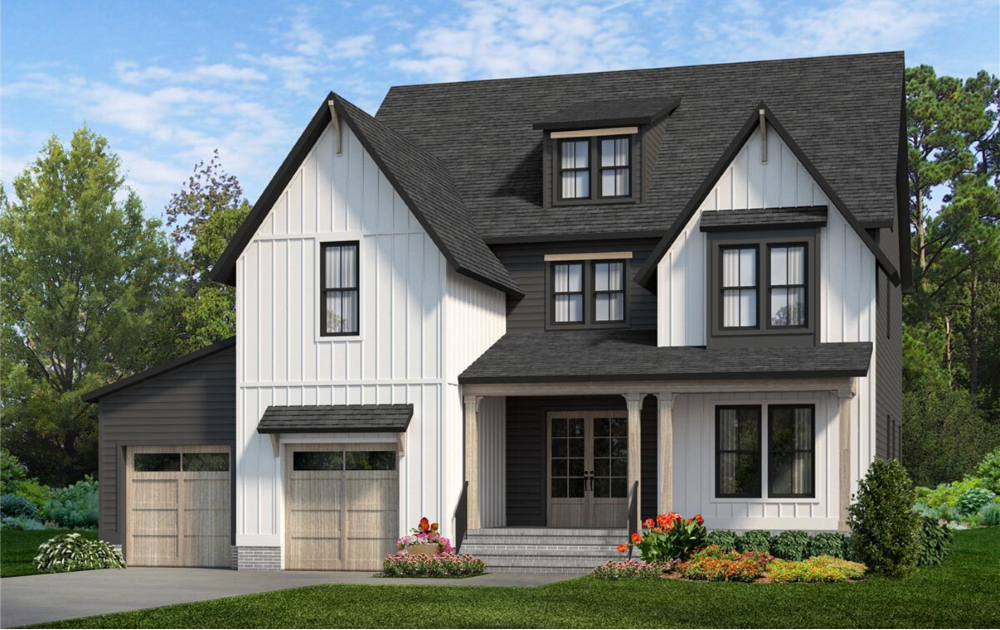
  • Edgewater – Clean rooflines, front porch framed entry, and window-forward design engage with this bold Scandinavian farmhouse. Inside, an appealing, open layout with vaulted gathering spaces amplifies uncluttered comfort designed for functionality.
Rendering copyright ArchitecturalDesigns.com and Associates
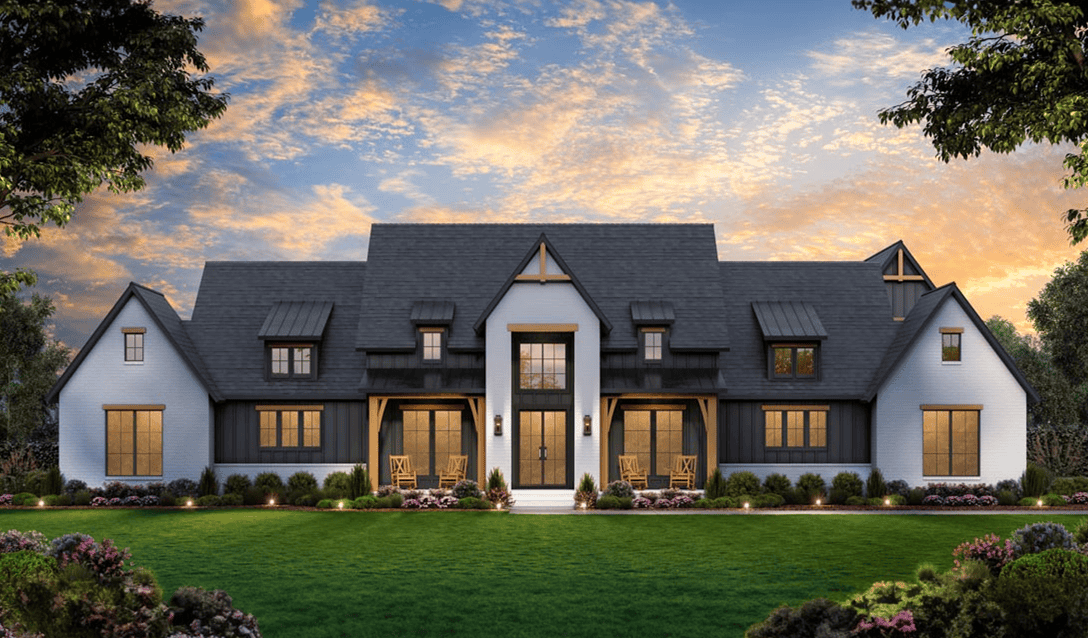
  • Nordic Ridge – True to its name, this intriguing plan reflects Scandinavian tradition of understated elegance.. Its single-level layout is designed with relaxed luxury living in mind, emboldened with natural light.
Rendering copyright ArchitecturalDesigns.com and Associates
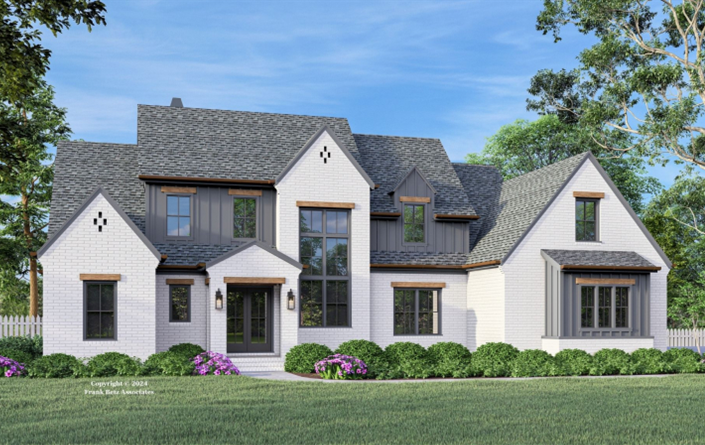
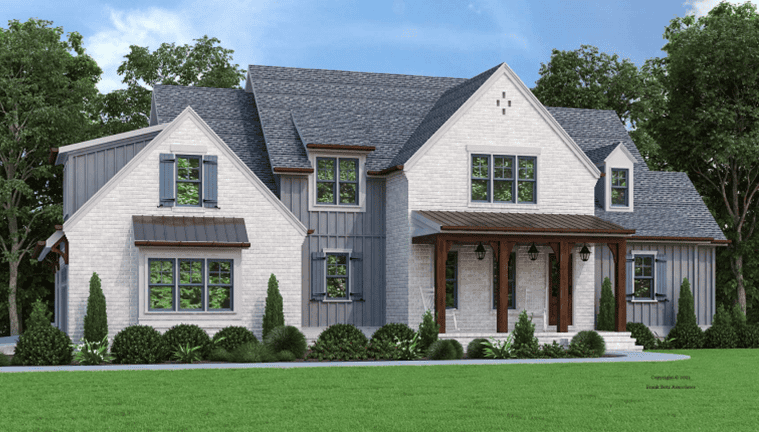
  • Forsyth Knoll – Defined by stunning stacked window groupings and a vaulted porch, Forsyth Knoll spotlights bold Scandinavian structure woven with welcoming farmhouse appeal. Brick and wood accents add North Carolina tradition for an artistic modern look.
Rendering copyright Frank Betz and Associates
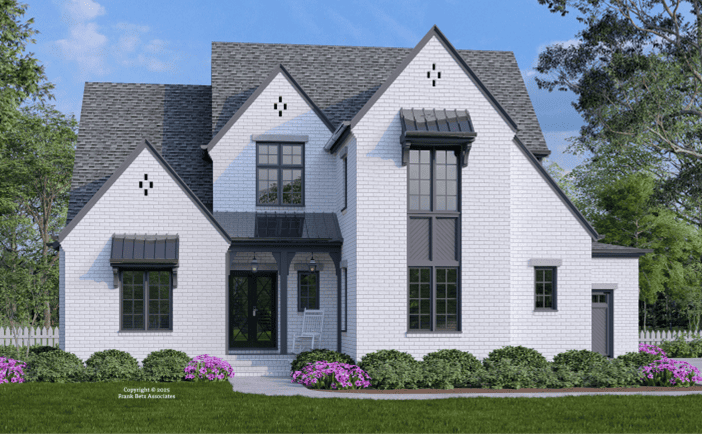
  • Crossville Manor – The curb appeal of steep gables and inspiring window placements contribute to the welcome feel of this Scandinavian farmhouse with a blend of symmetry and flexibility The interior is just as compelling.
Rendering copyright Frank Betz and Associates
  • Brookfield Walk – Modern contemporary farmhouse paired with Scandinavian simplicity gives this incredible custom home a timeless, classic feel. Clean exterior lines and efficient, open flow promote minimalism wrapped in awe-inspiring artistry.
White Contemporary Modern Farmhouse
Rendering copyright Frank Betz and Associates

Why Scandinavian Farmhouses Resonate in North Carolina

Scandinavian farmhouse homes blend beautifully into the rolling hills and wooded acreage of Chatham, Alamance, Orange, Wake, and surrounding counties. Striking rooflines and compelling window groupings stand out in custom home neighborhoods and countryside locations with a natural connection to landscape and luxury, with: 

  • Light-filled living – Floor-to-ceiling window arrangements light up your life.
  • Modern simplicity – Full of presence – with quiet elegance.
  • Farmhouse tradition –  Welcoming porches, natural connections, and thoughtful modern appeal.

Scandinavian Farmhouse, Built Locally

Some of our favorite architects designed these Scandinavian farmhouses and a lot of other plans we love to build in central North Carolina. From homesite planning to customizations, we work with you to adapt and enhance the design/build of your Scandinavian farmhouse style to the way you want to live—on your land or ours, together with the Travars Builder Brothers.

Have any Questions? Get in Touch Today!

What Should I Ask a Builder About Customizing My Home?

Let’s look at what “custom” really means — and how to bring your ideas to life.

Custom isn’t just a word we use in homebuilding — it’s the heart of what makes your home different from anyone else’s. I’m Andrew, and I’ll be working alongside you at Travars Built Homes to shape the spaces that matter most to your family. While I’ll guide you through this in person during your build, I wanted to share a few thoughts ahead of time. Here’s what I see when we talk about what “custom” can really mean in your home.

 “Custom” can mean different things to different people. What does custom mean to you, as you consider what you want your new home to have?

We work with you to design/build special spaces, when everything else you’re looking at doesn’t capture what you envision. 

Because the way you see the flow in your home and how you plan to live and grow there is something only you will know.

Maybe you need an extra en-suite for your family as time passes. Or maybe it’s just for your princess.

You might be looking that perfect kitchen with a secret pantry ( or secret second kitchen) Time out in a man cave. A home gym with room to stretch – areas of importance to you that aren’t always offered on floor plans.

We work with you to customize your plan and help you compare it to other plans.

Phil and I are true Builder Brothers. We work closely with you throughout the build process to help ensure your home is truly yours.

Whether you’re considering something classic, colonial, clever, contemporary or just about any architectural style, inside and out, I always enjoy the opportunity to be creative together, being a part of ideas, transforming them to paper and to reality.

No matter what “custom” means to you, Travars Built Homes will look at the possibilities. Because, to me, “custom” doesn’t just mean minor changes, like renaming a “dining room” to say “office” on a set of plans – it is so much more.

Looking forward to re-imagining your plan together.

– Andrew, Travars Built Homes

Have any Questions? Get in Touch Today!

Build On Your Lot NC | How to Build a New Home

Understanding Septic and Well Requirements When Building on Your Own Land in Orange County, NC

If you’re planning to build a home on your own land in Orange County, North Carolina—whether it’s in Efland, Cedar Grove, Hillsborough, or one of the other rural areas—you’ll want to be familiar with the county’s septic and well requirements before breaking ground.

The process for getting septic and well approvals can be different from county to county, so it’s important to know what to expect where your land is located. At Travars Built Homes, we work across Chatham, Alamance, Durham, Orange, Wake, and other surrounding counties, so we understand how to help you navigate the requirements specific to your property.

Build On Your Lot NC | How to Build a New Home

Septic System Requirements in Orange County

If your property is not served by public sewer, you will need a septic system to handle wastewater from your home.

In Orange County, the Environmental Health Division manages septic system approvals. The process typically includes:

  1. Application – Submit an application for a new septic system or improvement permit.
  2. Site Evaluation – A soil scientist or county environmental health specialist will evaluate your land for factors like soil type, slope, drainage, and space for a repair area.
  3. System Design – The type and size of the septic system will be determined based on the soil conditions, number of bedrooms, and household water use.
  4. Permit Issuance – Once the site plan is approved, you’ll receive a permit that allows installation.
  5. Final Inspection – After installation, the county will inspect the system before it can be put into use.

Tip: Soil conditions can vary greatly across Orange County—especially in rural areas like Cedar Grove and Efland. Testing early in the planning process can save you time and help with house placement on the lot.

Well Installation Requirements in Orange County

If your land does not have access to public water, you will need a private well for your home’s water supply.

In Orange County, well construction is also managed by the Environmental Health Division, and typically includes:
  1. Well Permit Application – Apply for a permit before any drilling begins.
  2. Setback Requirements – Wells must be located a minimum distance from septic systems, property lines, and potential sources of contamination.
  3. Water Testing – Once drilled, the water must be tested to ensure it meets safety standards for drinking water.
  4. Final Approval – The county must approve the well before it can be used.

Note: Setback and depth requirements can vary depending on your property’s location and soil type. Properties in rural Orange County often have plenty of space for both a well and septic, but site-specific conditions still determine placement.
Building Across Multiple Counties

Travars Built Homes is based in central North Carolina and builds in Orange County as well as Chatham, Alamance, Durham, Wake, and other surrounding areas. Each county has its own permitting process, so working with a builder who is familiar with multiple jurisdictions can streamline your experience and help avoid delays.

How Travars Built Homes Can Help

When you work with us to build on your land:

  • We stay involved at every step—from permitting to inspections—to make sure your project stays on track.
  • We coordinate with county officials, soil scientists, and well drillers.
  • We help arrange site evaluations early, so there are no surprises later in the build.
  • We factor septic and well locations into your home design and placement.

⚠️ Important Disclaimer

Regulations can change over time. Always confirm current septic and well requirements with Orange County Environmental Health before making land purchases or finalizing your home plans.


Have any questions about building your custom home on your own lot? Feel free to contact us!